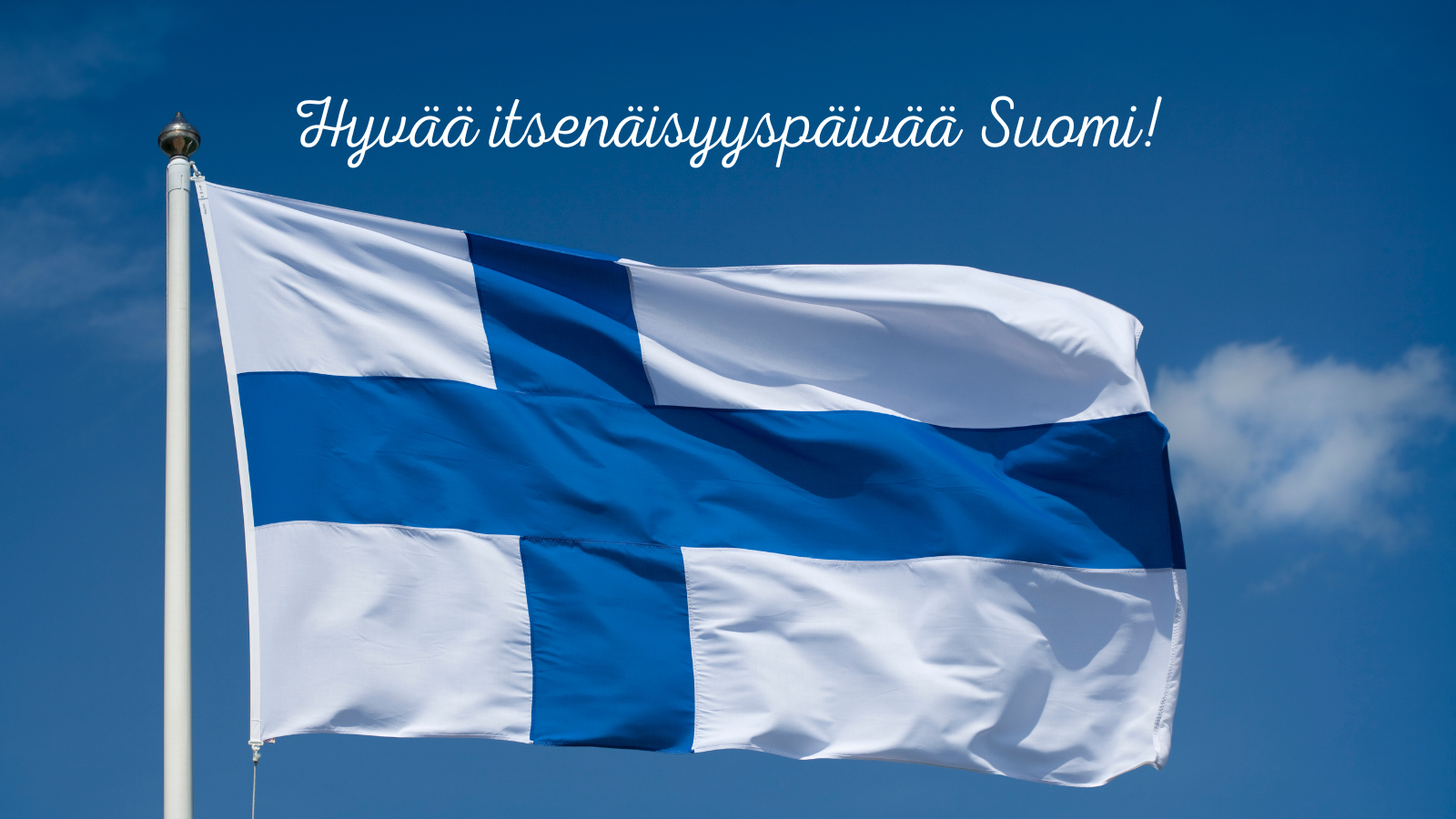
In the vibrant, kinetic symphony of the Philippines—a nation where joy is expressed in boisterous fiestas, resilience in karaoke songs sung amidst ruins, and identity in a vibrant, often tumultuous public square—the concept of Finnish independence might seem like a story from another planet. It is not marked by the cathartic, celebratory roar of a crowd at Luneta, nor does it evoke the same visceral imagery of revolutionary heroes and bloody battlefields that Filipinos revere. Finland’s independence, declared quietly on December 6, 1917, is a narrative woven in a different texture: one of stoic resilience, strategic pragmatism, and a profound, almost sacred, communion with the land and collective responsibility. For Filipinos, looking north to this Nordic nation is not an exercise in comparing histories, but an opportunity to engage in a revealing dialogue about the many forms freedom can take, the subtle arts of nation-preservation, and the quiet strength required to build a society that consistently tops global happiness and education charts.
The Foundation: Forged in Geopolitical Ice
To understand Finnish independence is to first grasp the weight of its geography. Unlike the Philippines, an archipelago whose historical challenge was uniting scattered islands under one flag, Finland’s story is one of living in the long, cold shadow of a powerful neighbour. For centuries, it was a Grand Duchy of the Russian Empire, and before that, under Swedish rule. Its independence was not won in a single, decisive revolution against a distant colonial power, but emerged from the chaotic vacuum of the Russian Revolution and the collapse of the old European order. The declaration itself was an act of parliamentary procedure, a calm seizing of a historical window.
But this quiet beginning was immediately followed by a searing trial: a brutal civil war in 1918, a conflict that left deep social scars. This is a crucial, often overlooked, lesson for any nation that romanticizes post-colonial unity. Finland’s experience underscores that independence is not an end, but a volatile beginning. The real task is not just ejecting an external power, but navigating the often more painful and complex process of defining what the nation is for its own people—a process that can pit brother against brother. The Philippines, with its own history of internal conflict and regional divides, can deeply relate to this painful second act of nation-building. The Finnish path suggests that acknowledging this internal strife, rather than burying it, is the first step toward a mature, if often quiet, national identity.
Sisu, Sauna, and Social Trust: The Pillars of a Functioning Society
From this fractured start, Finland built something extraordinary. The key lies in concepts that resonate far beyond the Arctic Circle. The first is sisu. There is no direct translation, but it encompasses a stoic determination, a gritty perseverance, and a sustained courage in the face of overwhelming odds. Filipinos have their own formidable version of this in lakas ng loob (inner strength) and bahala na (a complex acceptance of fate coupled with effort). Yet, sisu is often directed inward toward systemic, collective improvement. It was the sisu that rebuilt a nation devastated by World War II, paying colossal war reparations to the Soviet Union not with defeatism, but with a relentless industrial and civic work ethic that ultimately strengthened its economy.
This collective fortitude is nurtured in surprising places, notably the sauna. For Filipinos, whose social glue is the bustling karinderia or the family salo-salo, the sauna might seem merely a place to bathe. In Finland, it is a sacred, egalitarian space. In the hushed, heat-filled silence of the sauna, hierarchies dissolve. It is a place for reflection, for quiet conversation, and for a deeply ingrained sense of equality. This cultural ritual feeds into perhaps the most critical lesson Finland offers: an unparalleled level of social trust. Filipinos navigate a world where trust is often tightly bound within the family (utang na loob) or close personal networks. Finnish trust is diffuse, extending to strangers and institutions. Citizens trust that their government is largely uncorrupt, that their teachers are supremely qualified, that their police are helpful, and that their fellow citizen will follow the rules. This trust is not naive; it is the meticulously earned dividend of consistent, transparent governance and a fundamental belief in mutual responsibility. It is what allows their famous education system—where there is no tuition, no standardized testing mania, and immense respect for teachers—to thrive. The lesson isn’t that the Philippine model is wrong, but that investing in systems that are universally reliable can liberate a society’s immense creative and productive energy.
Neutrality as Strategic Assertion, Nature as National Soul
Another facet that demands Filipino reflection is Finland’s doctrine of neutrality and military preparedness. For a nation that lived through the Winter War, where a vastly outnumbered and outgunned Finnish force famously held the Soviet Union at bay, independence is seen as something vigilantly guarded, not just celebrated. Their policy of non-alignment was never passive pacifism; it was an active, intelligent, and heavily backed strategy for survival in the geopolitical crosshairs. Today, it manifests in a robust, conscription-based national defense and a society prepared for hardship. This stands in contrast to the Philippine experience, where colonial history has created a complex, sometimes fraught, relationship with foreign alliances and internal security. Finland’s example presents a model of self-reliance that is both pragmatic and fiercely proud, a reminder that true sovereignty requires the constant, unglamorous work of being prepared to defend it.
Equally profound is the Finnish relationship with nature. In a country where forests and lakes are omnipresent, access to nature is considered a fundamental right, codified in the concept of jokamiehenoikeus—everyman’s right. This allows anyone to roam, forage, and camp on private land (with respect). Nature is not just a resource; it is the bedrock of the national psyche, a source of solace, identity, and equality. For Filipinos, whose own breathtaking landscapes are often threatened by inequitable access and exploitation, the Finnish approach offers a powerful paradigm. It suggests that weaving environmental stewardship and universal access into the very fabric of citizenship can fortify a nation’s soul and its physical health.
A Dialogue of Contrasts and Shared Hopes
Ultimately, the Finnish narrative of independence offers the Philippine spirit not a blueprint, but a poignant counterpoint. It is a story where victory is measured not in decibels, but in decades of consistent, quiet progress. Where the national hero is not a single revolutionary figure, but the collective teacher, the engineer, the forester, and the mother trusted to raise educated children. It champions the power of silence, trust, and predictability as the fertile ground in which prosperity and well-being can grow.
For the Filipino, whose heart beats to a rhythm of communal warmth, improvisational brilliance, and expressive faith, these Nordic ways are not replacements, but fascinating complements. They invite reflection on how the deep, familial bonds of bayanihan could merge with broader institutional trust. They ask how the fierce passion for freedom could be coupled with the sustained, systemic sisu to improve daily governance. Finland’s story assures us that there is no one way to be free, to be proud, or to be a nation. Its greatest gift is the demonstration that sometimes, the most revolutionary act is not a shout, but a steady, collective commitment—season after snowy season—to build a society where independence means not just a flag flying freely, but a life lived with dignity, security, and quiet confidence for every single citizen.
Please log in to leave a comment.
No comments yet. Be the first to comment!
 Saints and Souls: A Global Journey Through Days of Remembrance
 Still Standing in the North: A Filipino Journey Through Uncertain Times
 Unemployment in Finland: What Filipino Workers Need to Know About Visas, Benefits, and Survival
 Finland Jobs for Filipino Chefs: How to Apply for Culinary Work in 2025